
Ravynn's (Updated) Guide to Getting into Comics Without Really Trying
Revisiting one of my favorite blog posts 10 years later

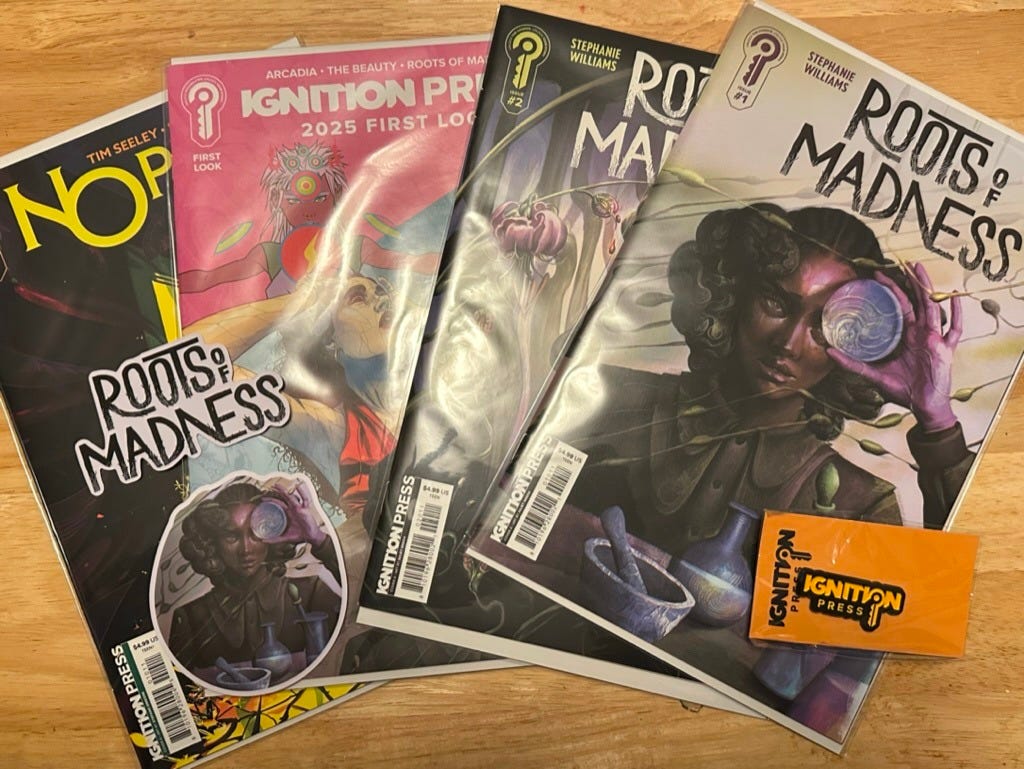
Since we’re all discussing 2016, how about a blast my comics past? Ten years ago (!!!) when I was dipping my toe into blogging under my name for the first time, I wrote a blog post with some advice for new folks trying to get into reading comics. The post came about after I decided I wanted to take my hobby of comics reading into the scholarly arena. I’d already written my French Distinguished Major thesis on bande-desinée, taught a student-designed, instructor-of-record course on superheroes as an undergraduate, and gotten admitted to William & Mary for my MA/PhD program in American Studies.
Since then, I’ve gotten my masters and PhD in American Studies, with my masters thesis entirely on comics and my dissertation partially on comics, new media more broadly; taught comics a bunch of settings, including my Black Comics class; written a TON about comics; and read a whole lot more.
I figured: why not revisit the advice I gave in 2016, and see what holds up, and what needs some revision?
“Ignore the people who will shame you for only watching the movies or TV shows and haven’t read the comics.
You can be a fan of superheroes without having read the comics. I’m not entirely sure why it’s the norm to look down on people who don’t read the comics (or even, don’t read the books). The simple fact is, even the most devoted comic fan, especially if they are young, probably has not read every issue in existence. They might have read a solid amount of one hero’s canon, but, man is even that a commitment. Accept that there will be haters. There will be people who will want to question your knowledge.
Know that you owe them nothing.
Do what brings you joy.”
2026 Edit: I was mostly talking about superhero comics in 2016. I more clearly talk about what types of comics you can read in the next suggestion down. But generally, I still stand by this advice if you have interest in dabbling in the American superhero mythos: engage with whatever you enjoy the most!
“Decide what you want to read/ask for suggestions.
Comics and graphic novels are as diverse in content as novels are. It’s really easy to misjudge them and say they’re only about superheroes, since honestly, that’s the implication when we say “comic” in America. When you start deciding what you want to read, ask yourself some questions: what kind of novels do you like? If you like historical fiction or memoirs, you might enjoy a graphic novel like March, which details civil rights activist, John Lewis’ life. If you like sci-fi, but you’re looking to avoid the DC/Marvel superhero craze, maybe Neil Gaiman’s The Sandman might be a better fit for you.
If you think you might want to try and break into the world of superheroes, ask yourself similar questions. Do you like fantasy and the unexplained and don’t care how unrealistic the story is? Superman’s your guy. If you prefer logic puzzles and detective mysteries, maybe Batman is more your speed. Ask yourself what kind of tone you’re looking to engage in. If you’re not into darkness and psychodrama, you might want to avoid the Gotham, for example. Want to read about one hero, or ensemble pieces where you get more bang for your buck, so to speak?
If that still is overwhelming, ask a friend who likes comics to suggest something for you. More than likely they’ll know you well enough to point you in the direction of something you like.
Just remember, reading comics can be a literary, historical, political, or artistic experience, if you let it be. They’re not all about butt-kicking.”
2026 Edit: No notes.
“Decide how you want to read.
Comic collecting is an expensive hobby. I only buy a few crucial volumes, like The Killing Joke or Superman: Red Son, and I buy volumes of runs that I follow, like the new 52 Wonder Woman and Cameron Stewart and Babs Tarr’s Batgirl. That said, do what you want, but I don’t recommend investing money in buying until you know what you like.
Then ask yourself, do you like physical books or digital media? If you like digital, there are plenty of platforms to buy digital copies of comics, my preferred being comixology.com. The best part about these platforms is that you can also explore its archives, and comixology even has a free comics section for download. That by itself is a great way to explore comics without the investment. Download a few different issues and take note of which ones you enjoyed! If you like the physical book…”
2026 Edit: LOL, cringing at the fact that I was referring to The Killing Joke as a crucial volume at that stage. This is still generally true, I am pretty selective about committing to runs but after almost two decades of reading comics, I know what I like to spend money on: types of stories, publishers, authors and artists I like to follow.
Also, RIP comixology. It was never a great option because…owned by Amazon…but it was a great accessible option for a lot of comics readers, and especially for folks who either did not have a local comic book store or didn’t frequent theirs for whatever reason. (I did not have good luck with my LCS in Williamsburg, so I was a pretty consistent reader on Comixology.)
I’ve mostly been reading print comics for the last three years, so I don’t actually know how folks who prefer digital are reading right now. Will have to investigate and report back.
“Utilize your public library!
This was really how I got into comics. A friend that I used to hang out with all the time, told me he had to stop by the library to pick up another Constantine comic. Confused, I followed him into the library and discovered with glee that, yes, the public library has comics!
The pickings might be slim depending on where you live, but it’s definitely a way to get started! With the full volumes there in the library for you, you can skim to your hearts content before you decide which ones are gonna get to go home with you.
*(Plus, once you really get into them, you can even ask your library to order and reserve your favorite comics, or ask them to borrow books you don’t have from a library near by. The library system is a beautiful thing.)”
2026 Edit: NO NOTES! USE YOUR LIBRARY IF YOU’RE JUST GETTING STARTED AND TRYING TO FIGURE OUT WHAT YOU LIKE!!!
“Get an ‘Ultimate Guide,’ visual history or background book of your favorite hero.
These are amazing.
Literary critics, scholars of cultural studies, historians, artists and authors a like love writing about their favorite heroes as much as we want to hear about them. It is very likely that someone, somewhere has written a comprehensive overview book of the superhero-in-question’s history in comics, film and other media. I HIGHLY suggest reading these. They’re usually full of information but extremely readable, and often pretty! They usually take you through the character’s entire development since their inception. My favorite so far has got to be Investigating Lois Lane, Tim Hanley’s quest to put all things Lois Lane in a book. (So, trust me, if there’s a book on Lois Lane, there’s probably a book on your favorite.)
Ultimate guides, or encyclopedias, are fun because they tell you about anyone or anything that has to do with the hero in question. However, ultimate guides tend to be written in encyclopedia format so just take a look before buying to make sure you know what you’re getting yourself into. I have a Wonder Woman Encyclopedia that’s a little tough to get through, a Superman ultimate guide that I love (it’s extremely visual), and a Batman visual history that is probably one of God’s greatest gifts to man.
All of them reference specific issues or comic runs, so while you’re reading, you can keep track of the issues that sound interesting then go find them on comixology!”
2026 Edit: I don’t hate the ultimate guide suggestion, but I don’t really like it any more. I do like the getting background books on your favorite hero suggestion (again, I keep conflating superhero comics with comics generally in this piece, which is frustrating for Current Me, who was a professor long enough that I’m shouting “BE SPECIFIC” at my Younger Self).
I still love Tim Hanley’s books, but by now I have a bunch of favorite Black comics scholars and historians I follow for info: Qiana Whitted, Grace Gipson, Christian M. Hines, John Jennings, Keisha Parks (The Blerd Library) are my Go-To’s.
“Read technical books to help you figure out exactly what you’re looking at on a page.
If you’ve never even picked up a comic before, you might be confused as to how to even begin to read them. If that’s you, I’d recommend reading something like Understanding Comics by Scott McCloud. It’s a comic book about how to read comics. It breaks down what’s on a page for you, how different artistic styles and techniques are just as effective at communicating thought and feeling as the right word, and goes over things we don’t even think about, like how time is portrayed in comics. It’s a great read, super informative, and will probably be instrumental in changing how you think about comics.”
2026 Edit: NO NOTES! You’re gonna go get one (or all three) of Scott McCloud’s technical books, Will Eisner’s Comics and Sequential Art, Lynda Barry’s Making Comics, and then maybe explore something like Nick Sousanis’ Unflattening and read Kay Sohini on writing a graphic dissertation.
“Read blogs/tumblrs about your favorite characters.
Most of my knowledge about comics comes from following fan blogs on tumblr. Every manner of comic fan can be found on blog sites: you got your DC specific blogs, your Captain America-only blogs, your Aquaman and Green Arrow blogs, your Mary Jane Watson blogs, your Gotham blogs, your POC comic blogs, your feminist comic blogs…you name it, you can find it on the internet.
For example, I followed tons of DC specific blogs, Superman blogs, and a select few Lois Lane blogs, like marodi08.tumblr.com. Because I like select Marvel comics, I didn’t really follow general Marvel blogs, but I would follow X-Men blogs and Spider-Man blogs.
Engage with the bloggers. Read their stuff. Ask them what their favorite issues are and I guarantee, they’d be more than willing to help you find your way. They spend their time creating those blogs for a reason.
A lot of times, just reading gives you enough information. They often post cool panels from their favorite issues, talk about what they’re excited to read next, history, summaries, reviews…
Also, if you find one blog you really like, pay attention to who they reblog. Those blogs are likely to be right up your alley as well.”
2026 Edit: Again, no notes. Right now, there are so many cool Black comics podcasts and content creators, there’s literally not time enough to name them all. If folks are interested, I can do a round up later, but the show that I tune into every Thursday is Pink Riot Comic Show with Keisha and Bri. It’s a great time, every time. I love when it’s just them talking about their pull lists, but also love when they have guests. Last week they had Stacey Robinson, Alverne Ball and Dorado Quick on the show and it was a great conversation.
“Read comic inspired novels and watch comic inspired TV shows and films.
Self-explanatory.
I love watching shows and films because they’re based on the comics. It gives you a general idea about that world is about. Also, shows are great because they’re self contained. For example, watching DC TV shows is so much less stressful than reading the comics because you don’t have to worry about what happened before, whether or not it’s pre- or post-crisis. Within the show, they will tell you what you need to know to be able to follow.
Comic inspired novels like Gwenda Bond’s Lois Lane series are great because it helps you ease into the world in a medium you might be more comfortable with, and gives you the same comfort of a show, in that the world is self-contained. What you need to know to follow is within those pages.”
2026 Edit: Again, I’m conflating superhero comics with just comics generally, but yeah this is fine advice if you’re looking to jump into American superhero. I also think picking up a DC YA graphic novel is a good way to enter American superhero comics. They’re self-contained stories following usually one character at a time, with lots of cameos from other folks, but they’re usually about universal coming-of-age themes, they just happen to also have to deal with super powers at the same time so they can be easier to read. I just finished L. L. McKinney, Robyn Smith and Manou Azumi’s Nubia: Too Real, and it was a GOOD TIME.
You could also benefit from consuming things about comics generally. Cheyenne Ewulu’s show The Comic Shop is about a young woman who opens a comic book store in her community and it’s hilarious, with lots of smart observations about comic/nerd culture.
“Don’t limit yourself.
As I mentioned at the beginning, comics come in all manner of types. Some of my favorite are written by Ivorian, Syrian and Iranian authors about political unrest and engage in important social commentary. (I was a French major, y’all.) You can find comics on anything. Sometimes, your favorite novel series might even have a graphic novel counter part! Graphic Classics for examples, produces graphic novel adaptations of your favorite classic novels, like Emma or the short stories of Edgar Allen Poe. Explore everything this medium has to offer, because it has so much!”
2026 Edits: No notes!
“Have fun and jump right in!
Shut out the noise. Go to your local library. Pick up a comic, any comic. Check it out. Read.
Enjoy.”
2026 Edits: MWAH! Chef’s kiss! No. Notes!
Recommendations!
Okay. While parts of this were, in fact, horrifying to read, this was actually a pretty solid list of advice. Definitely not as cringe-worthy as it could have been! But we are grateful for growth, man.
I’ll wrap this up with a couple recommendations.
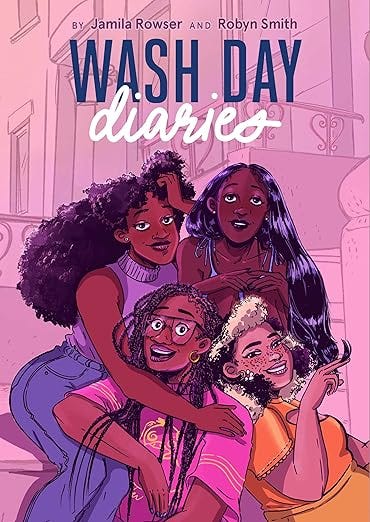
If you’re new to reading comics—like have never read them at all but are interested in trying and are uninterested in superheroes—I recommend the graphic novel Wash Day Diaries by Jamila Rowser and Robyn Smith. I have taught this and folks who have never read comics before LOVE it. The simplified color palette for each character means the pages aren’t as busy, so it’s easier to figure out where your eye should go and move on the page. They also use fewer panels than some books, so again, easier to figure out where the narrative is going. Slice-of-life means you’re not having to keep track of a really intricate plot while also trying to teach yourself to read visually. The graphic novel means that you’re going to get a longer, but contained story. It’s not serial. The whole plot is in that book. Plus, if you’re looking for something that really beautifully depicts the softness of young Black womanhood and sisterhood, this is honestly one of the best books around.
Honorable mention to Liz Montague’s Maybe An Artist.
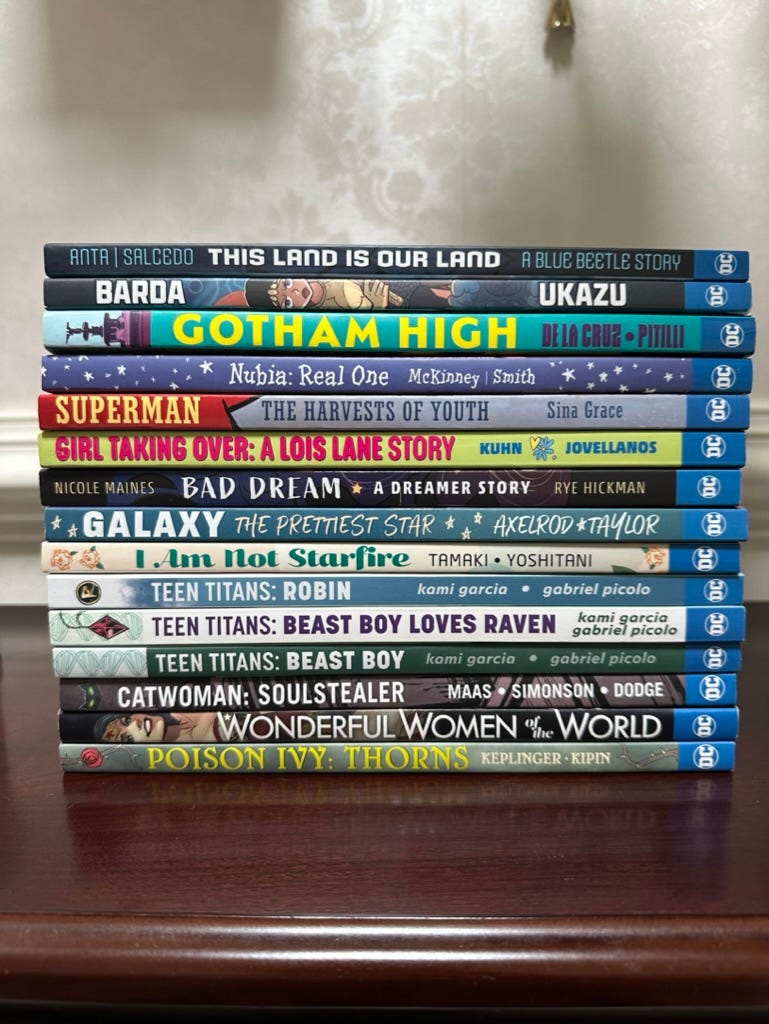
If you’re interested in American superhero comics but monthlies scare you and you just want to try to see if you even like this stuff, and the YA graphic novels I was talking about earlier sounded good to you, I would try either L.L. McKinney and Robyn Smith’s Nubia books or Lamar Giles and Paris Alleyne’s Static: Up All Night. They’re literally just so fun. They’re the kind of books you basically forget you’re reading about a superhero while still getting all the fun of superhero culture.


Honorable mention: This Land is Our Land: A Blue Beetle Story by Julio Anta and Jacoby Salcedo
Remember: “Have fun and jump right in!”
If you’re new here and you don’t want to do all that clicking to find out what I’m about: I’m Dr. Ravynn K. Stringfield, a writer, editor, artist and former Peanut Fest Queen from Suffolk, Virginia. I am the author of two novels for young adults, Love in 280 Characters or Less (Feiwel & Friends, 2025) and Love Requires Chocolate (Joy Revolution, 2024). I am a product of Virginia public schools (Suffolk Public Schools) and universities (University of Virginia), all the way up to my PhD in American Studies from William & Mary. I’ve been published in a variety of venues for the last six years—book collections, magazines, scholarly journals—but most importantly, I’m a life long reader and a maker of beautiful things.
*
I just can’t get behind putting my Substack behind a paywall, but I do respect that sometimes folks want leave a little something in the plate for a good post.
Here’s my Ko-Fi. If you feel moved to leave a dollar or something, thank you! My personal blogs have been free for 10 years, I’m not interested in changing that now. You can also buy physical and digital copies of my zines there!
Great advice! I started reading comics last year, and they are loads of fun. For me, Libby is perfect so I can check them out from my local library, and read them on my iPad.
This is such amazing advice! I made it a point to get into reading graphic novels a year ago, but I haven't fully gotten into the swing of things. Definately, going to add some of your recommendations on my reading list!